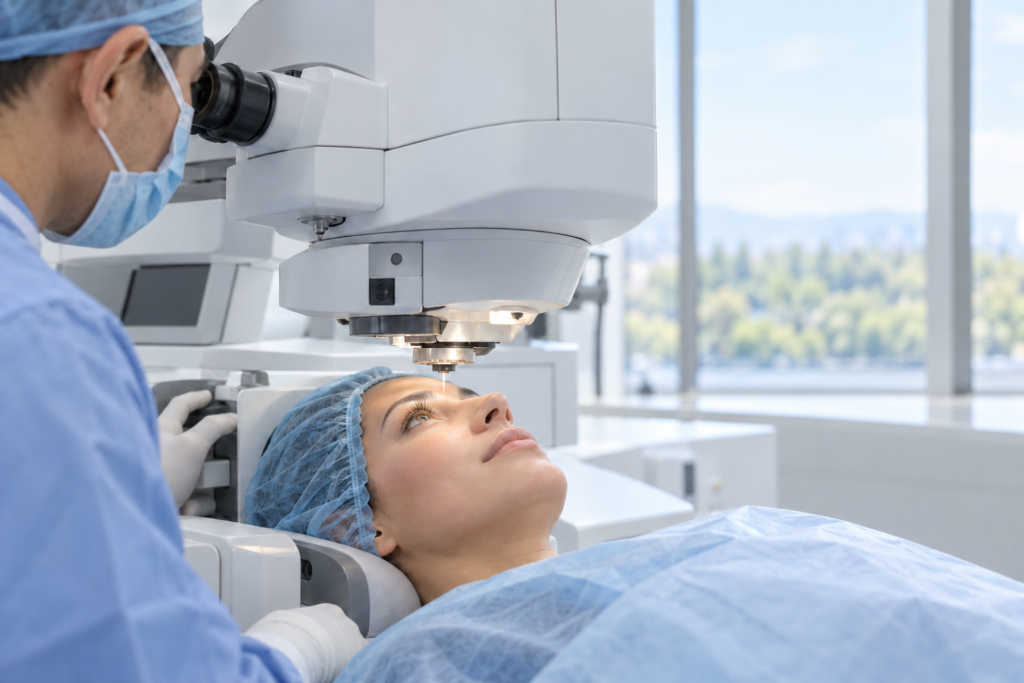
Once an evaluation confirms that a patient is a suitable candidate for LASIK, the next practical question is: how long does the procedure take? Understanding that timeline helps patients fit treatment into their schedule, plan time off work, arrange a ride home, and know when they can return to their usual activities.
The LASIK procedure itself typically takes about five minutes per eye, with the full visit to the laser center lasting about 60-90 minutes. However, patients are advised to reserve the remainder of the day for rest and return the next morning for a checkup and clearance before resuming regular routines.
The full LASIK timeline is best understood as a series of steps, rather than the procedure time alone. This article explains the preparation, the visit, and the recovery afterward to help you plan each stage.
Table of Contents
LASIK Procedure Duration Vs. Total Appointment Time
LASIK procedure time includes positioning, flap creation and laser reshaping, and repositioning the flap. The laser is active for only part of the procedure. The full appointment also allows time for preparation, additional imaging when needed, brief recovery, and arranging departure.
This helps explain why you may find different LASIK durations quoted in online articles and forums. Some refer to the treatment itself, while others include time in the room or the full visit. Before using a number to plan your day, check what it includes.
| Part of your LASIK timeline | What I usually tell patients to plan for |
| Procedure itself | About five minutes per eye. |
| Time at the laser center | About 60-90 minutes, including time around treatment. |
| Remainder of treatment day | Rest; avoid screens and reading as instructed. |
| First follow-up | The next morning to check the flap. |
| Work, screens, and driving | Usually the next day, after examination and clearance. |
| Prescribed postoperative drops | Usually about one week, following the actual prescription. |
| Contact sports | Avoid for one month. Other activities have their own instructions. |
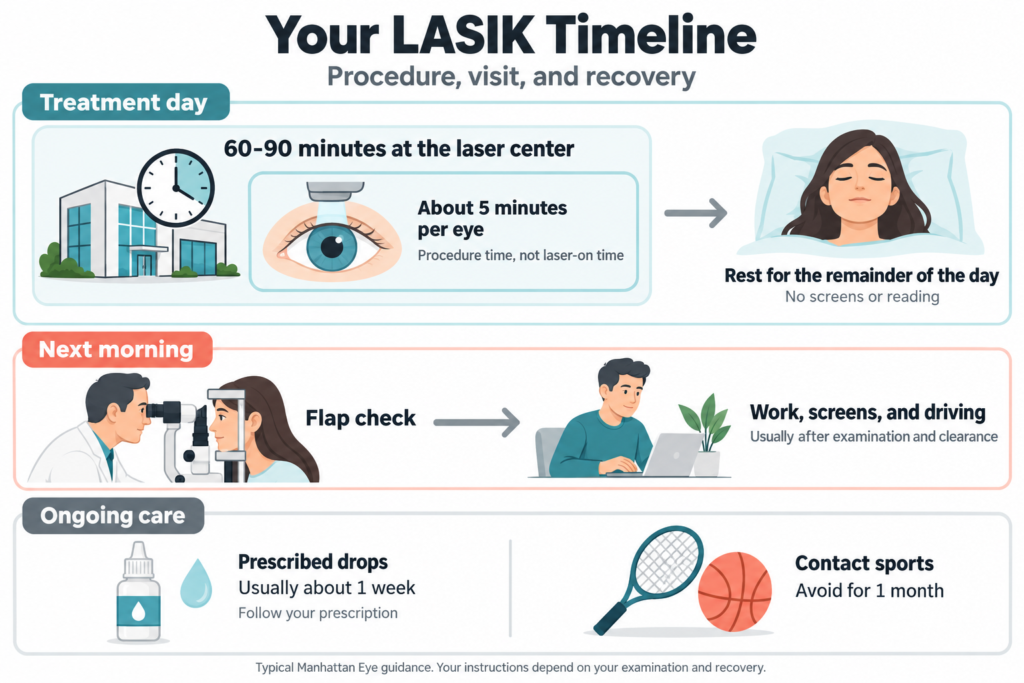
While these are my usual planning guidelines, specific instructions depend on your examination, treatment, and recovery.
How Contact Lenses And Measurements Affect The LASIK Timeline
Some of the time needed for LASIK comes before treatment day. An evaluation establishes whether the procedure is appropriate for your eyes and provides the information needed to plan it. It also gives you an opportunity to discuss risks, benefits, alternatives, and questions before deciding.
If you wear contacts, allow for time out of them before your measurements. Contact lenses can change the shape of the cornea, affecting the measurements used to plan treatment. The interval depends on the lenses you wear, and measurements may need repeating to confirm that they are stable.
Before final LASIK measurements, I generally advise patients to stay out of regular contact lenses for ten days and astigmatism-correcting contact lenses for two weeks. The interval may be adjusted depending on the lenses worn and whether measurements are stable.
I also pay close attention to the health of the eye’s surface before proceeding. If dryness or unreliable measurements need attention, that preparation needs more time. There is no useful single waiting period that covers every patient’s situation.
What Takes Time At The Laser Center Beyond The Procedure?
Your visit includes the time needed to prepare for treatment and leave afterward. Sometimes additional images or photographs are helpful before we proceed. Positioning also needs to be correct, and patients spend a short period recovering afterward or waiting for someone to take them home.
That is why the procedure estimate should not become your pickup time or the basis for scheduling a meeting immediately afterward. Arrange your day around the planned visit, with room for the steps surrounding treatment.
I recommend having someone help you get home, particularly if you have received prescribed medication to help you relax. Do not plan to drive yourself home. The FDA advises arranging transportation because relaxing medication can impair driving, and vision may be blurry after treatment.
For a closer look at what happens during treatment and what it can feel like, read our Bladeless LASIK Surgery Guide.
Why Careful LASIK Preparation Matters
The measurements and calculations behind your treatment deserve careful attention. The ocular surface should be as healthy as possible so that the measurements used to plan LASIK are accurate.
A procedure can go well anatomically and still fall short of the intended visual result if the measurements behind it are wrong. Taking time with that preparation is central to the outcome.
The same applies to positioning. Getting the setup right before proceeding is better than pushing ahead and needing to repeat a step. Discussion, consent, and patient questions also need the time they require.
LASIK is efficient, but it remains a procedure that calls for careful preparation and follow-up. A short treatment time does not reduce those commitments. Our guide to modern LASIK covers the technology and screening decisions in more detail.
Plan To Rest For The Remainder Of Your LASIK Day
After LASIK, I ask patients to rest for the remainder of the day and evening. Avoid screens, reading, and cooking. Close your eyes and rest, listen to music or an audiobook, or sleep.
You can attend to essential needs, such as eating or going to the bathroom. The aim is to keep the evening quiet rather than return to work, errands, or tasks that require using your eyes.
Making arrangements beforehand helps. Have a meal ready, leave work messages for later, and ask someone else to handle reading to children or putting them to bed if those responsibilities would interrupt your rest.
Not everyone needs someone staying at home throughout the evening. What matters is whether your responsibilities would make it difficult to follow the rest instructions. Arrange help with those tasks where needed, and take prescribed medication only as instructed.
The fact that you leave the center the same day should not be taken as a reason to fill the rest of that day with activities.
The Next-Day LASIK Check Comes Before Returning To Your Routine
Attend your follow-up appointment the next morning so your surgeon can confirm that the flap is properly attached. Wait for clearance before returning to your regular routines.
After the check, patients can usually return to work, use screens, commute, and drive once cleared. I also include heavy lifting among activities that can be fine after clearance. My concern is protecting the eyes from contact, injury, or anything getting into them.
Returning to everyday activities does not mean every precaution has ended. Contact sports should be avoided for a month. Activities such as swimming, scuba diving, or skiing also need specific guidance because of water exposure or the possibility of eye injury. Do not assume the contact-sport timeline applies to each of them; follow the instructions for the activity you want to resume.
When scheduling work or travel for the following morning, account for the appointment first. Leave room to adjust your plans if you are not cleared to do what you had intended.
Returning To Work Does Not Mean Vision Has Fully Settled
Being able to resume work and everyday tasks is different from having completely steady vision. I see patients whose clarity fluctuates during the first couple of weeks, and the ocular surface can contribute to those changes.
Continue the care prescribed for your eyes even after you have returned to your routine. Do not use the work-return date as a reason to stop your drops or other instructions early.
The two eyes can also take different amounts of time during treatment or recovery. A difference in timing alone does not tell us what the long-term result will be.
However, worsening symptoms should not simply be treated as normal settling. Contact your doctor immediately for severe pain or worsening vision rather than waiting for a scheduled visit.
Planning Your LASIK Visit And Recovery
Planning for LASIK means allowing time for preparation, the center visit, the evening of rest, and the next-day review. During your consultation, we can discuss how those commitments fit your work, travel, and responsibilities at home.
Frequently Asked Questions About LASIK Duration
How much time should I take off work for LASIK?
Reserve the treatment day for the visit and rest, and allow time for the following morning’s check. Returning to work after clearance is often possible that day, but avoid committing to a schedule that leaves no room for the examination or a change in instructions.
Will I need someone with me for the whole evening?
Not necessarily. Help getting home and help throughout the evening are separate arrangements. Consider whether childcare, meals, or other responsibilities would prevent you from resting, and arrange assistance with those tasks if needed.
Can I use my phone or computer the evening after LASIK?
We advise avoiding screens and reading for the remainder of the treatment day. Plan to rest, listen to music or an audiobook, or sleep. Screen use can usually resume after the next-morning examination and clearance.
Does a longer procedure on one eye mean something went wrong?
Not necessarily. The two eyes can take different amounts of time during treatment, and timing alone does not indicate a problem or predict the long-term result. Your surgeon can explain any difference you notice.
About the Author