Lacrifill Canalicular Gel in NYC
Keep your natural tears on your eyes longer with Lacrifill Canalicular Gel. This in-office treatment slows tear drainage to support surface moisture. At Manhattan Eye, we tailor tear-retention care to your eyes and the cause of your dryness.
More Time with Your Own Natural Tears
Your tears lubricate and protect the surface of your eyes. If retaining more of those tears would help your dry eye symptoms, reducing drainage can be part of your treatment plan.
Lacrifill is a soft hyaluronic acid gel placed within the small drainage channels in your eyelids. It stays in those channels rather than being applied as a daily eye drop. We assess your tear film, eyelids and drainage system to understand how it fits with your existing care.
Lacrifill at a Glance
- Treatment type: An in-office gel treatment that slows tear drainage.
- Treatment goal: Keep your natural tears on the eye longer to support moisture and comfort.
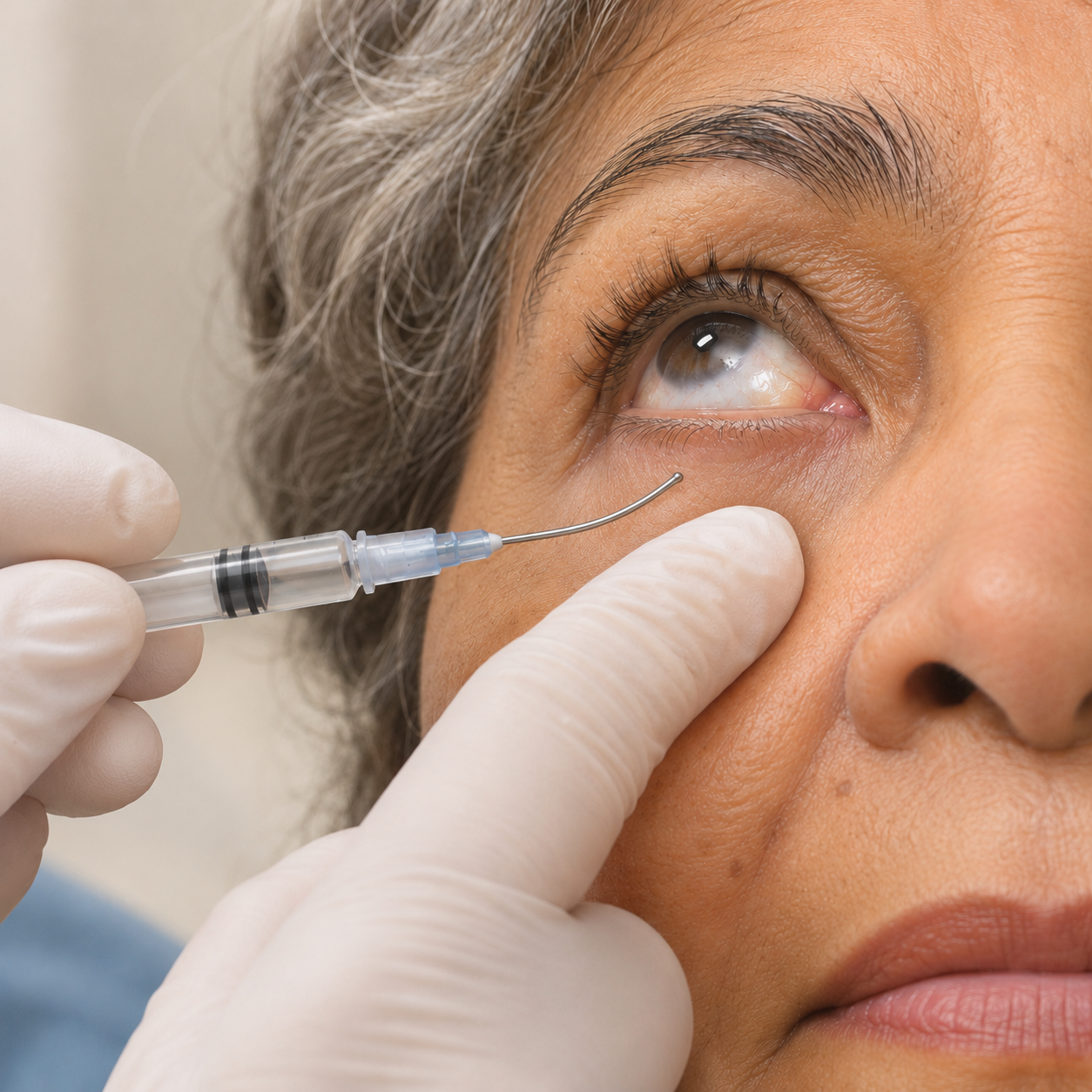
- What is involved: Placement through a small tear-drain opening in the eyelid, without an incision.
- Follow-up: We remove the gel within six months, reassess your eyes and discuss whether repeat treatment is appropriate.
How Lacrifill Helps Retain Your Tears
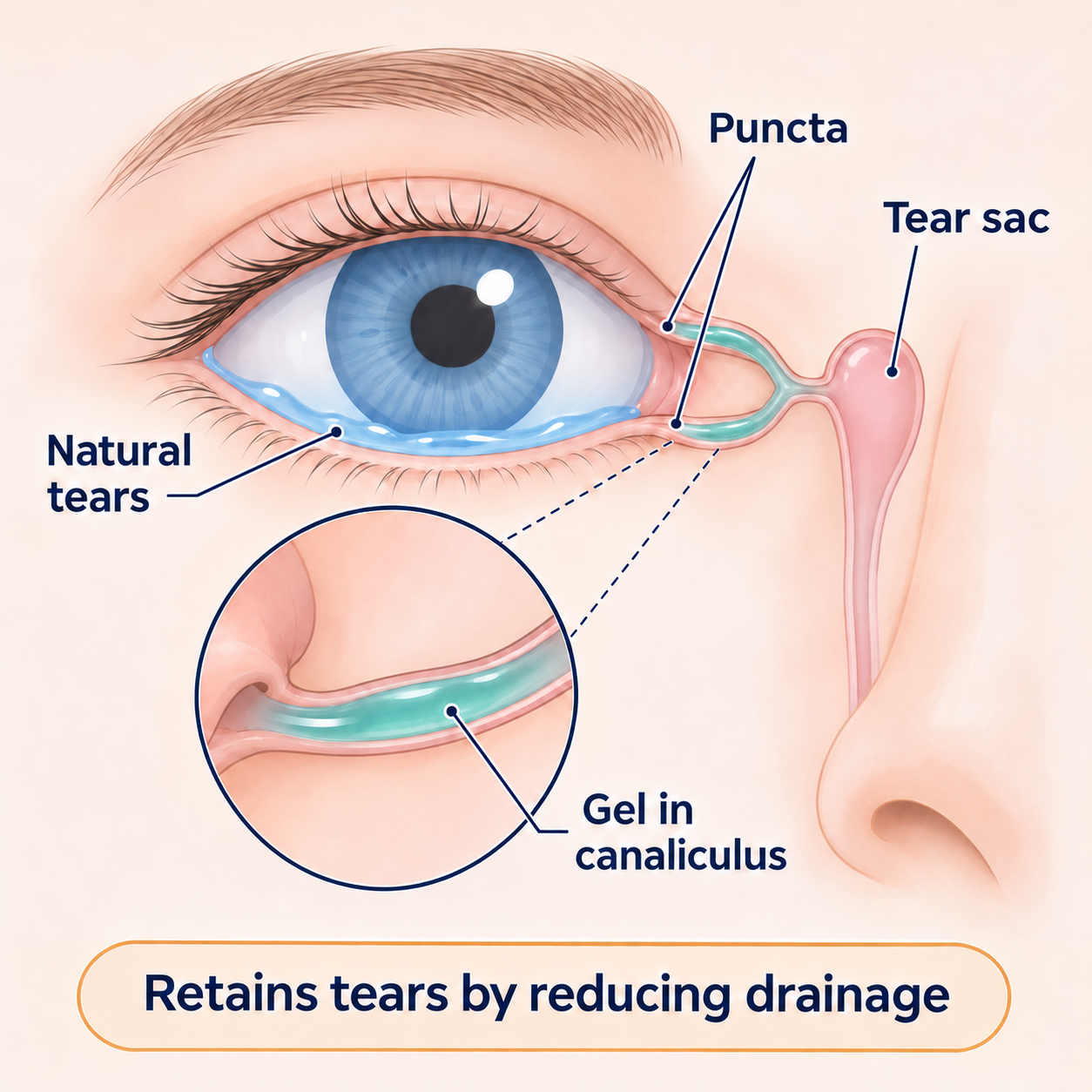
Tears normally leave the eye through tiny openings near the inner corners of the eyelids, called puncta. These lead into small channels called canaliculi. Lacrifill uses cross-linked hyaluronic acid gel to block this drainage pathway, helping tears remain on the eye surface longer.
The gel works by retaining tears, not by making your eyes produce more of them. It also does not directly clear blocked oil glands. If gland dysfunction or inflammation contributes to your dryness, we can address those problems alongside tear-retention treatment.

Lacrifill Benefits and Limitations
Keeping more tears on the eye can support lubrication and ease dry eye symptoms. Lacrifill does not need daily application, and a randomized clinical study reported improvements in dry eye signs and symptoms through six months, with overall results similar to another canalicular plug.
Your response depends on the causes of your dryness and the rest of your care plan. The six-month use period is not a promise of six months of relief, and treatment does not automatically replace your drops or eyelid care. We review how your eyes respond and adjust your plan when needed.

Who Is Lacrifill Treatment For?
Lacrifill is an option for people whose dry eye symptoms would benefit from retaining more tears. We assess your tear film and drainage, review previous plugs or tear-duct procedures, and consider any treatment you already use.
Lacrifill is not suitable if you have excessive tearing, eyelid inflammation, an active infection in or around the eye, a known drainage blockage, or an allergy to hyaluronic acid or another device material. Tell us about these issues and bring a list of your eye medicines so we can plan appropriate care.

What to Expect at Your Lacrifill Visit
We assess your eyes and check that your tear-drainage channels are open before treatment. Numbing drops help with comfort. We then introduce the gel through the small drainage opening in your eyelid using a fine tube called a cannula.
Placement usually takes only a few minutes and does not involve an incision or an injection into the eyeball. Tell us if you feel discomfort during the procedure. Before you leave, we discuss aftercare, your existing drops and the follow-up and removal plan.
After Your Lacrifill Visit
Possible effects include eye pain, irritation, watering, eyelid discomfort and infection. Tear retention can also change exposure to eye medicines, so keep using your drops as directed unless we advise a change. Contact us promptly for increasing pain, redness, discharge or reduced vision.
The gel must be removed within six months, in line with the product instructions. Removal involves flushing the drainage system, a process called irrigation. Earlier removal is sometimes necessary. If irrigation does not clear the gel, further treatment, including probing or surgery, may be needed. We reassess your eyes before discussing repeat treatment.

Lacrifill Care with Dr. Rapoport in NYC
Dr. Yuna Rapoport, MD, MPH, is a board-certified ophthalmologist with fellowship training in corneal and refractive surgery at Mass Eye and Ear of Harvard Medical School. She has also led clinical trials of dry eye medicines.
At Manhattan Eye, Dr. Rapoport evaluates your tear film, eyelids and drainage system to decide whether Lacrifill fits your needs. We consider tear retention alongside care for inflammation and oil-gland dysfunction, with a plan for follow-up and removal.
Frequently Asked Questions
Lacrifill: Frequently Asked Questions
How is Lacrifill different from punctal plugs?
Both reduce tear drainage. Lacrifill uses a gel placed within the drainage channels, while punctal plugs are preformed inserts. The choice depends on your eyes, previous treatment and the removal plan. Lacrifill is not automatically a better choice for everyone.
Is Lacrifill an eye drop I use at home?
No. We place the gel within your tear-drainage channels during an office visit. You do not apply it each day.
Can Lacrifill be used with other dry eye treatments?
Yes, when appropriate for your eyes. Tear retention can complement treatment for inflammation or meibomian gland dysfunction. Options such as TearCare address a different part of the tear film. Your examination guides which treatments belong in your plan.
Does Lacrifill dissolve on its own?
No. Lacrifill is not designed to dissolve during its use period. The Lacrifill Instructions for Use specify removal within six months. We discuss the removal plan before treatment and assess whether earlier removal or further care is needed.


Explore Tear-Retention Care at Manhattan Eye
Schedule an evaluation with Dr. Rapoport to discuss whether Lacrifill fits your dry eye treatment plan.