Specialty and Compounded Dry Eye Drops in NYC
Persistent eye discomfort can have different causes, from nerve sensitivity to problems with the tear film or eye surface. At Manhattan Eye, Dr. Yuna Rapoport assesses your condition to determine whether compounded lacosamide, autologous PRP or compounded testosterone eye drops fit your treatment needs.
Eye Drops Selected for Your Diagnosis
Lacosamide, PRP and testosterone preparations have different purposes. We assess your symptoms, eye surface and treatment history to identify the problem a prescription should address.
Compounded medicines are prepared by a pharmacy for an individual medical need. Lacosamide and testosterone eye drops belong in this category. PRP is a separate blood-derived preparation made from your blood. We prescribe these treatments and work with a pharmacy that prepares them; they are not made on site at Manhattan Eye. Each is considered individually, with its own evidence, handling requirements and follow-up.
Specialty and Compounded Eye Drops at a Glance
- Options: Compounded lacosamide, autologous PRP and compounded testosterone eye drops.
- Treatment focus: Nerve-related discomfort, eye-surface support or selected hormone-related gland concerns.
- What is involved: An individual prescription and preparation by a pharmacy we work with; PRP also requires blood collection.
- Follow-up: We assess comfort, eye-surface findings and preparation-specific safety to guide ongoing care.
How Lacosamide, PRP and Testosterone Eye Drops Work
Lacosamide Eye Drops
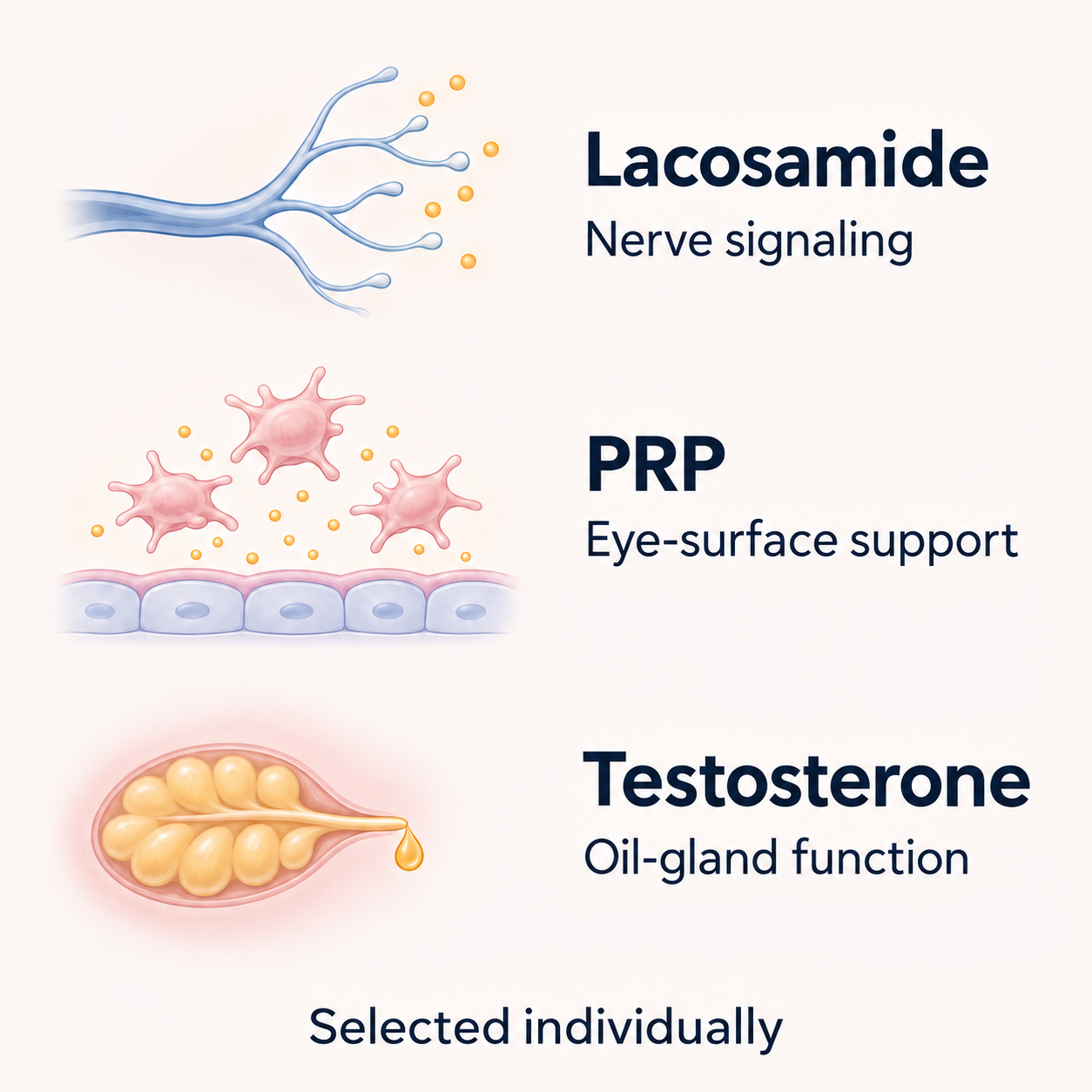
Lacosamide affects sodium channels involved in nerve signaling. It is considered for selected nerve-related corneal discomfort, with the aim of reducing abnormal nerve activity contributing to symptoms.Autologous PRP Eye Drops
PRP stands for platelet-rich plasma. A pharmacy we work with processes your blood to obtain plasma enriched with platelets. Platelets contain proteins and growth factors involved in tissue repair; the drops are intended to support eye-surface health.Testosterone Eye Drops
Testosterone is an androgen hormone involved in the oil-producing meibomian glands. Their oils help slow tear evaporation. A prescribed ophthalmic preparation is considered when hormonal factors may contribute to gland dysfunction and an unstable tear film.
Specialty and Compounded Eye Drops: Benefits and Limitations
Lacosamide eye drops are prescribed with the aim of improving comfort when nerve-related pain is part of the problem. Supporting corneal research is preclinical, and evidence of benefit in patients remains limited. We assess your response rather than predict a fixed result.
Autologous PRP eye drops are supported by clinical research as an option for selected dry eye and eye-surface problems. Results depend on the condition and preparation. The choice between PRP and serum tears depends on your condition and treatment needs.
Testosterone eye drops are used with the aim of supporting tear-film stability and comfort. Evidence for ophthalmic formulations remains limited, so we assess suitability and monitor your response individually.
Who Are These Specialty Eye Drops For?
Lacosamide eye drops are considered when nerve-related pain contributes to your discomfort. We assess persistent burning or sensitivity alongside dryness, inflammation and other possible causes before selecting treatment.
Autologous PRP eye drops are considered for selected patients with persistent dry eye or eye-surface problems. We review your eye findings, medical history and whether blood collection and the handling requirements are practical for you.
Testosterone eye drops are considered after we assess your eyelids, gland function and medical history. Tell us about pregnancy, plans to conceive, breastfeeding, hormone-sensitive conditions and other hormone treatments. Eye symptoms alone do not diagnose a hormone deficiency.

Starting Your Prescribed Eye Drops
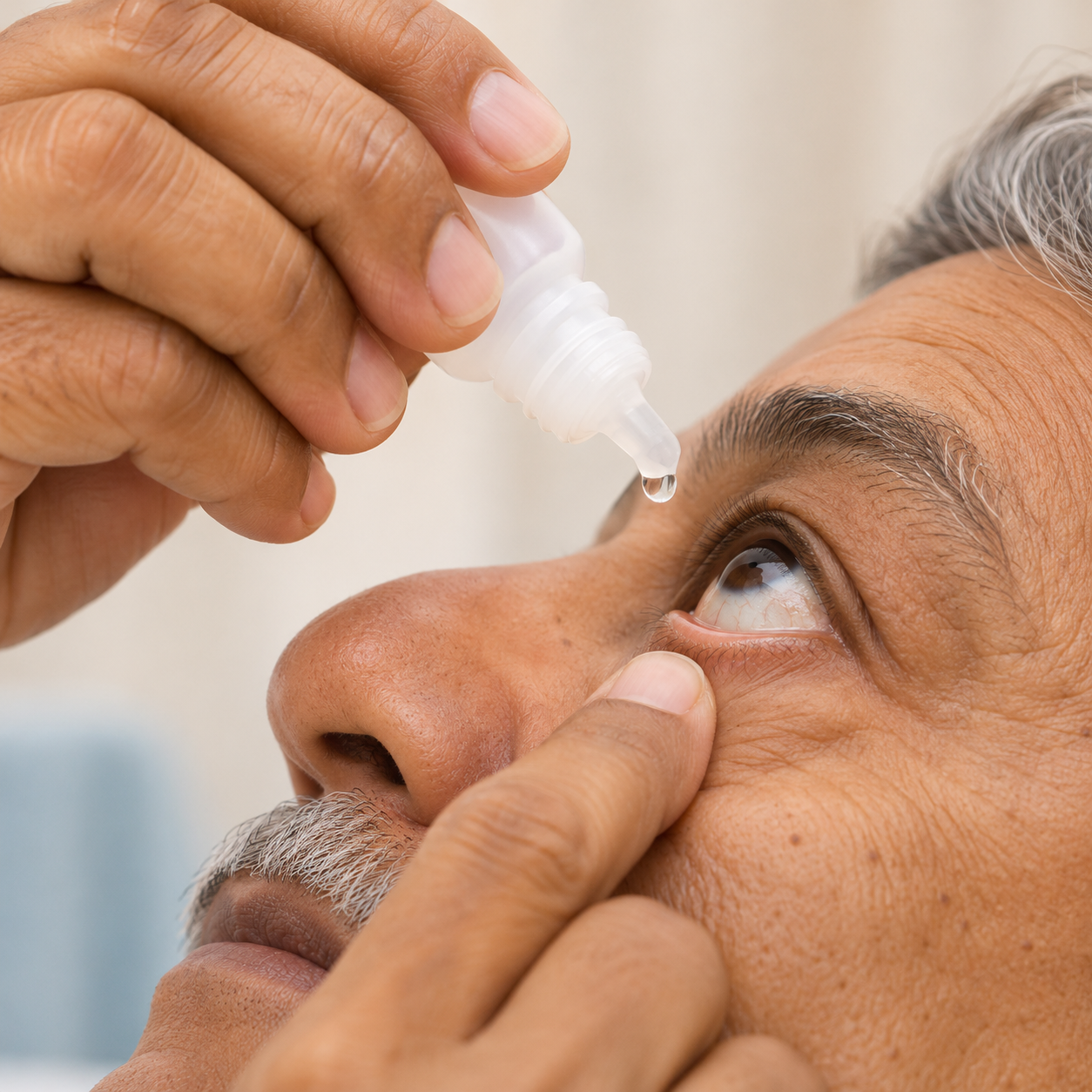
Before prescribing lacosamide eye drops, we assess your symptoms and corneal surface. A pharmacy we work with prepares the ophthalmic formulation and supplies its dosing, storage and discard instructions. Use only the eye-drop preparation dispensed for you; oral lacosamide products must not be put into the eye.
Autologous PRP eye drops require blood collection and preparation by a pharmacy we work with. Check the collection arrangements, how you will receive your drops and the written handling instructions before starting.
For testosterone eye drops, we review the proposed formulation and your monitoring needs, then arrange preparation through a pharmacy. Use only the eye-drop preparation prescribed for you; testosterone skin gels and creams must not be put into the eye.
Using Your Drops and Monitoring Your Response
Follow the instructions for your particular preparation, including dosing, storage and disposal. A storage schedule for one product does not apply automatically to another. Keep the dropper tip from touching your eye or other surfaces. Contamination can lead to infection; contact us promptly for increasing pain, new or worsening redness, discharge or worsening vision.
Report persistent irritation or changes in your symptoms. With testosterone, systemic absorption is possible; report new hormonal symptoms such as acne, unwanted hair growth or voice changes. We review both your response and safety before deciding whether to continue or adjust treatment.

Specialty Eye Drop Care with Dr. Rapoport in NYC
Dr. Yuna Rapoport, MD, MPH, is a board-certified ophthalmologist with fellowship training in corneal and refractive surgery at Mass Eye and Ear of Harvard Medical School. She has also led clinical trials of dry eye medicines.
At Manhattan Eye, Dr. Rapoport assesses your tear film, eyelids and corneal surface to select care for the cause of your symptoms. We consider specialty preparations alongside established treatment options and monitor your progress, with attention to the evidence and handling requirements of each prescription.
Frequently Asked Questions
Specialty and Compounded Eye Drops: Frequently Asked Questions
Are compounded eye drops and PRP eye drops FDA-approved?
Compounded drugs are not FDA-approved. The FDA does not review their safety, effectiveness or quality before marketing. They can serve an individual medical need, but approval of an ingredient in another medicine does not approve the compounded eye-drop formulation. Read the FDA’s explanation of compounded drugs.
PRP is a custom blood-derived preparation, not an FDA-approved dry eye drug.
Are PRP eye drops the same as autologous serum eye drops?
Both come from your blood, but they are processed differently. PRP retains or concentrates platelets, while serum is obtained after blood has clotted. The preparations and their instructions are not interchangeable. Learn more about autologous serum eye drops.
Will I need all three types of eye drops?
These preparations address different concerns and are not a standard three-drop regimen. Your diagnosis and treatment response guide which, if any, belongs in your care plan.
How long will I use specialty or compounded eye drops?
The duration depends on the preparation, the condition being treated and your response. We agree on follow-up and assess whether treatment should continue or change. Follow your prescription rather than another patient’s schedule.


Discuss Specialty Eye Drops at Manhattan Eye
Schedule an evaluation with Dr. Rapoport to determine which treatment fits your symptoms and eye-surface needs.