Some patients notice their eyes are still dry even when they keep using eye drops. One reason is what artificial tears can and can’t do. They can ease dryness for a while, but they don’t address why it’s happening, whether your tears are evaporating too quickly, draining too soon, or sitting on an eye surface that needs to heal.
Knowing the cause changes which treatment makes sense. Some eyes need protection while the surface heals. Others may benefit from keeping natural tears on the eye longer, or from a prescription drop chosen for a specific condition.
Manhattan Eye now offers three additional options for selected patients: CAM360 amniotic membrane treatment, Lacrifill Canalicular Gel, and specialty eye drops.
CAM360 Amniotic Membrane Treatment
CAM360 AmnioGraft is a thin, ringless dressing made from processed, donated amniotic membrane. It temporarily helps protect and support the eye’s surface. It’s used in selected cases when that surface is damaged or having trouble healing.
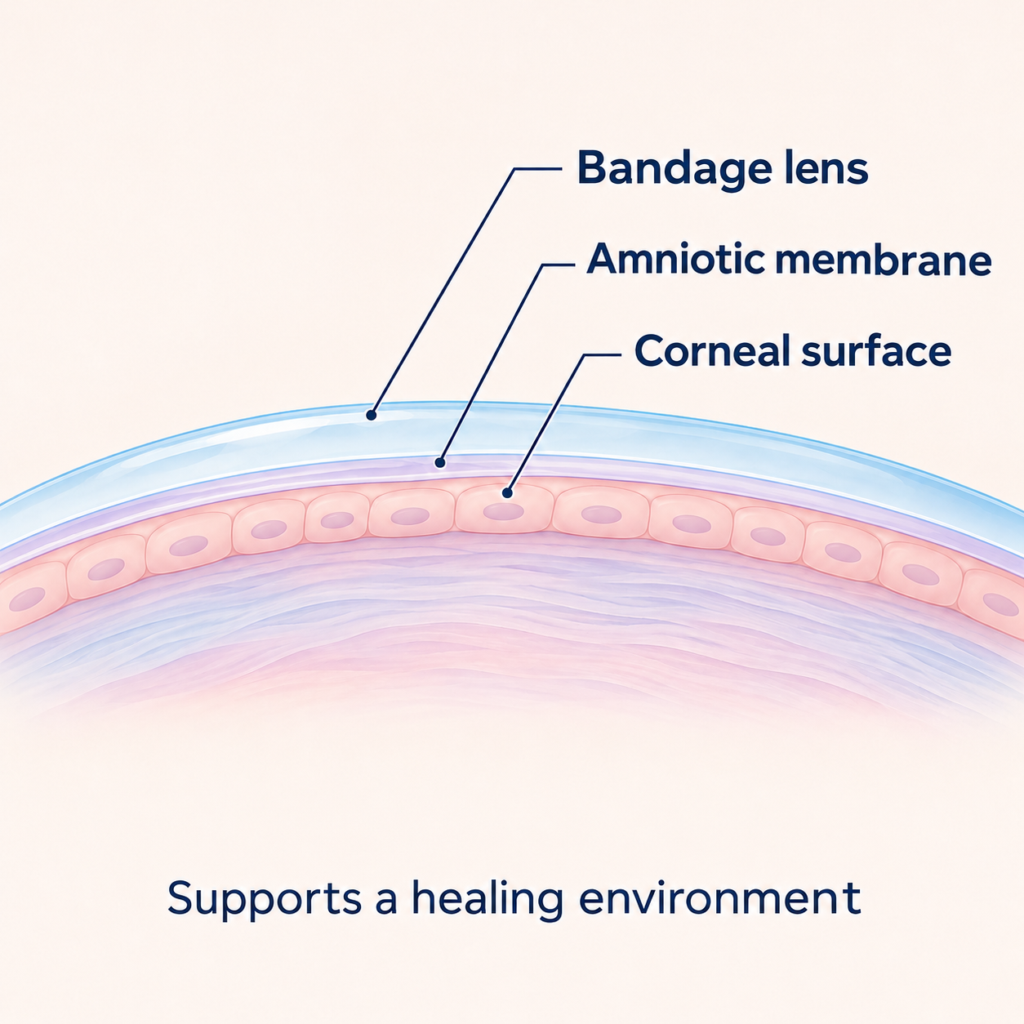
The membrane is placed during an office visit. Your care plan covers how it stays in place, when to return for a check, and whether the dressing or any supporting lens needs to be removed.
Lacrifill Canalicular Gel
Your tears normally drain through tiny channels near the inner corners of your eyelids. Lacrifill is a soft gel placed in those channels during an office visit. It slows drainage so your natural tears stay on the eye longer.
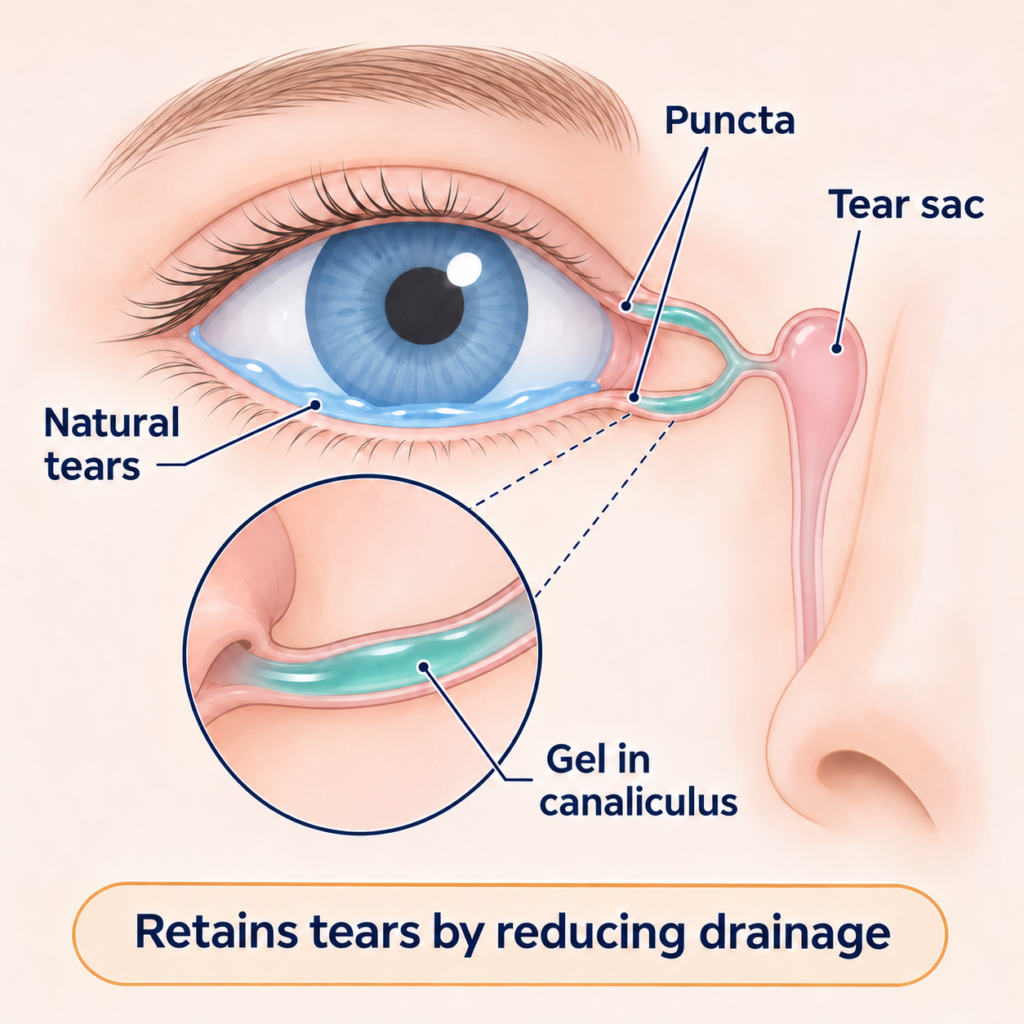
Lacrifill may be an option if keeping more of your own tears on the eye could help with dryness. It isn’t suitable for everyone, including people with excessive tearing, eyelid inflammation, or an active eye infection. Before placement, the channels are checked to confirm they’re open. Lacrifill is intended for use for up to six months, and how long you feel relief varies. The gel is removed by then, or sooner if needed, typically by flushing the channels.
Specialty Eye Drops
Specialty drops serve different purposes, so the choice depends on your exam findings and what you’ve already tried.
Oxervate (Cenegermin)
Oxervate is a prescription eye drop FDA-approved for neurotrophic keratitis. In this condition, the cornea, the clear front surface of the eye, loses some of its sensitivity and can have trouble healing. Oxervate contains a form of human nerve growth factor and is used to help the cornea heal in patients with this diagnosis. It isn’t a routine dry eye drop.
Autologous Platelet-Rich Plasma (PRP) Eye Drops
PRP drops start with a blood draw. A pharmacy prepares the drops using plasma enriched with your own platelets. Serum tears also come from your blood, but use the liquid collected after it clots. PRP drops are custom-made from your own blood, so they aren’t a standard FDA-approved medicine. They may be an option to support eye surface health in certain conditions.
Compounded Lacosamide and Testosterone Eye Drops
These drops are prepared by prescription for individual patients. As compounded medicines, they don’t go through the FDA approval process, and the evidence varies by preparation.
- Lacosamide may be considered when nerve sensitivity contributes to eye discomfort. Early laboratory research has explored its effects on corneal nerves, and evidence in patients remains limited.
- Testosterone may be considered when hormonal factors appear to affect the eyelid glands that supply oil to your tears. Research on testosterone eye drops is limited. Your medical history, including pregnancy, breastfeeding, and hormone-sensitive conditions, helps determine whether it’s an option for you.
What to Expect during a Dry Eye Consultation at Manhattan Eye
If you’re unsure which option to ask about, start with what you’re experiencing. Tell us when your eyes bother you most and what you’ve tried so far. We’ll share what the exam shows, which options fit your eyes, and what to expect from treatment and follow-up.
Your visit can also cover other treatments we offer, including IPL and radiofrequency (individually or together), TearCare, BlephEx, Prokera, and autologous serum tears. Explore dry eye care and Schedule Your Dry Eye Consultation at Manhattan Eye.
Explore All Dry Eye Treatments at Manhattan Eye
- IPL + Radiofrequency (RF) Dry Eye Treatment
- RF Dry Eye Treatment
- TearCare
- BlephEx Eyelid Cleaning
- Amniotic Membrane Treatment
- Lacrifill Canalicular Gel
- Oxervate Eye Drops
- Autologous Serum Eye Drops
- Specialty and Compounded Eye Drops
About the Author